


Industrial vs. Standard Washers: Which Should You Choose? Compare Performance and Value
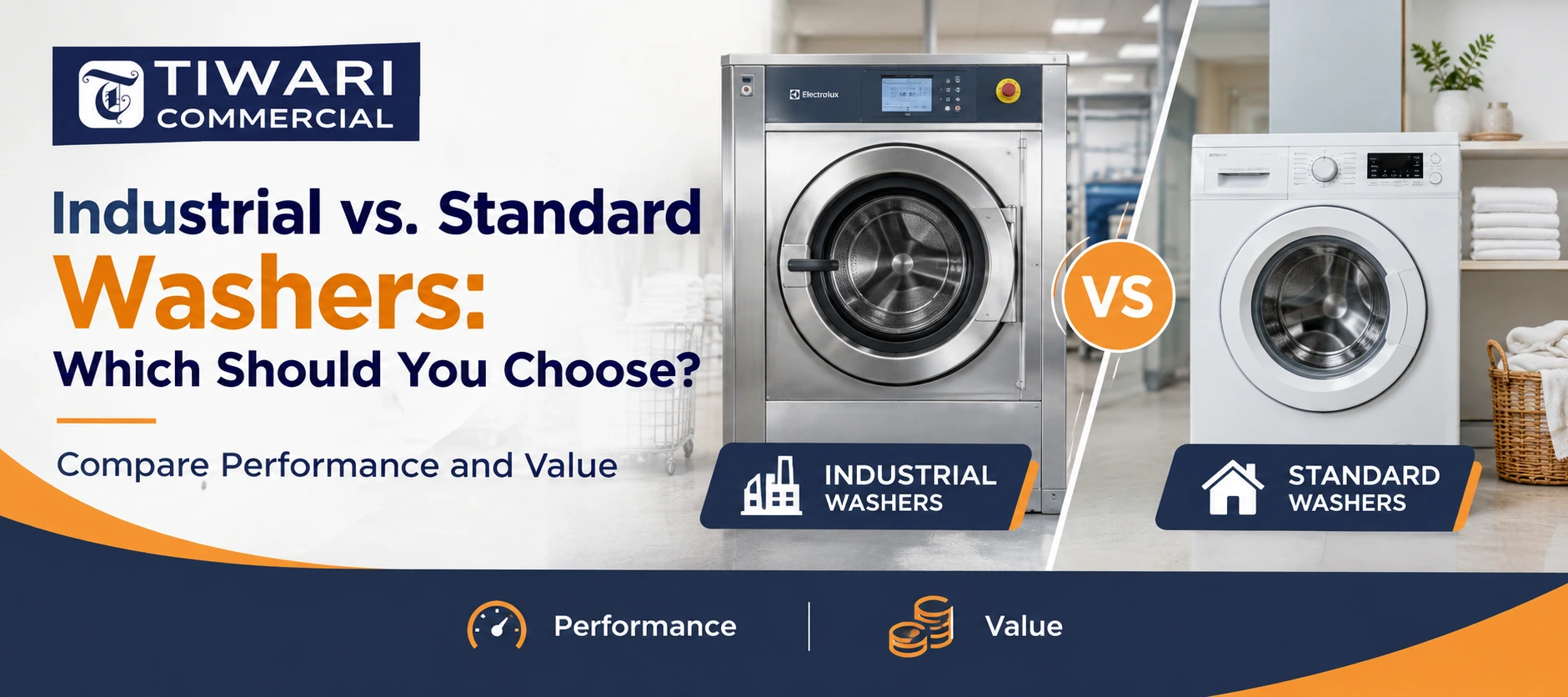
Every equipment buyer eventually hits the same fork in the road: stick with standard washing equipment because it's familiar and cheaper upfront, or step up to an industrial washer dryer setup because your operation has genuinely outgrown what standard machines can handle. Neither choice is automatically right — it depends entirely on what your business actually needs, measured honestly rather than guessed at.
This isn't the same question as "commercial versus home washer." Standard commercial washers are already a step up from residential machines, built for moderate business use — a small laundromat, a boutique hotel, a modest retail laundry service. An industrial washer dryer setup is the next tier up again, engineered for continuous, heavy-volume, heavy-soil operation that standard commercial equipment was never designed to sustain.
Performance: Where the Real Gap Shows Up
Duty Cycle and Lifespan
Standard commercial washers are typically rated for moderate daily use — enough for a laundromat or small hotel running a predictable, limited number of loads per day. Industrial washer dryer systems are built for genuinely continuous operation: back-to-back cycles across multiple shifts, with components engineered for significantly higher total wash-cycle counts across their working life. If your business runs equipment nonstop rather than in scheduled bursts, this gap in engineering tolerance is the single biggest factor separating the two categories.
Soil-Handling Capability
This is where industrial equipment earns its name. Standard washers handle typical soiling well — body oils, food stains, general grime. Industrial washer dryer systems are engineered with more aggressive wash programs and heavier mechanical action specifically for oil, grease, chemical residue, and industrial contamination — the kind of soiling found in manufacturing plants, automotive shops, and construction operations. Running heavily soiled industrial workwear through standard equipment not only produces worse results, it accelerates wear on components not built for that level of contamination.
Temperature and Chemical Tolerance
Industrial-grade equipment typically supports higher sustained wash temperatures and broader chemical compatibility, which matters directly for facilities needing specific disinfection standards, oil and grease breakdown, or compliance-driven wash protocols. Standard washers often can't sustain the same temperature consistency across back-to-back cycles without components degrading faster than intended.
Drying Performance
On the dryer side, industrial units typically offer higher airflow volume and more precise temperature control, which matters significantly for heavier industrial fabrics — workwear, heavy-duty textiles, PPE — that take longer to dry properly and need consistent heat distribution to avoid damage or incomplete drying.
Value: The Comparison Most Buyers Get Wrong
Buyers frequently compare industrial and standard equipment purely on upfront price, which tells an incomplete story. The more accurate comparison is cost-per-load over the equipment's working life, which accounts for purchase price, expected lifespan, repair frequency, and energy/water efficiency together.
Standard commercial washers cost less upfront but carry a shorter realistic lifespan under heavy use, and pushed beyond their intended duty cycle, breakdown frequency climbs sharply — often showing up as repeated repair costs within the first few years rather than a single large expense down the line. Industrial washer dryer systems cost considerably more upfront, but that investment is amortized across a much longer working life and far higher cycle tolerance, which is exactly why the cost-per-load comparison often favors industrial equipment once volume crosses a certain threshold — and works against it below that threshold, where you're simply paying for capacity you won't use.
A Practical Framework for Deciding
Rather than guessing, walk through these questions honestly for your own operation:
What's your actual daily volume? Track it for a real week, not an estimate. Low volume, moderate soiling, predictable schedule — standard equipment usually wins on value. High volume, heavy or industrial-grade soiling, continuous operation — industrial equipment usually wins over a multi-year horizon.
What's your soil profile? General laundry (linens, towels, light uniforms) rarely needs industrial-grade wash programs. Oil, grease, chemical residue, or heavy industrial contamination genuinely does — standard equipment will underperform and wear out faster trying to handle it.
What's your operational schedule? Equipment running scheduled, limited daily cycles has very different requirements than equipment expected to run continuously across multiple shifts without rest.
What's your realistic ownership horizon? If you're planning to operate from the same facility at similar or growing volume for 5+ years, industrial equipment's longer lifespan has more time to pay back its higher upfront cost. A shorter or uncertain horizon weakens that case considerably.
Where This Decision Actually Gets Made Right
The honest answer for most businesses isn't a universal rule — it's a volume-and-use-case calculation specific to your operation. We walk through exactly this with clients regularly, because recommending industrial equipment to a business that doesn't need it wastes their capital, and recommending standard equipment to a business that will run it into the ground within a year costs them far more in breakdowns and replacement than they saved upfront.
Our Washers page and Dryers page cover the full range from standard commercial units to heavy-duty industrial washer dryer systems, so you can see the actual capacity and specification differences side by side. For manufacturing, automotive, or industrial environments specifically dealing with heavy soiling, our industrial laundry solutions for manufacturing companies go into more detail on equipment built for that exact use case. If your operation sits closer to a laundromat or commercial laundry business model instead, our Commercial Laundries solutions covers equipment sized for that volume and workflow.
The Bottom Line
Industrial equipment isn't inherently "better" than standard commercial equipment — it's built for a different operational demand, at a different price point, with a different payback timeline. The businesses that get real value out of an industrial washer dryer setup are the ones whose actual daily volume and soil profile genuinely match what the equipment was engineered for. The businesses that overpay are the ones who bought industrial capacity for standard-level needs, assuming bigger and tougher automatically means better value — it doesn't, unless your operation is actually using that extra capability.
If you're unsure which category genuinely fits your business, reach out to our team with your actual daily volume and soil type — that conversation, more than any spec sheet, is what determines the right answer for your specific situation.