


Top Load vs Front Load Commercial Washing Machines: Which Cleans Better?
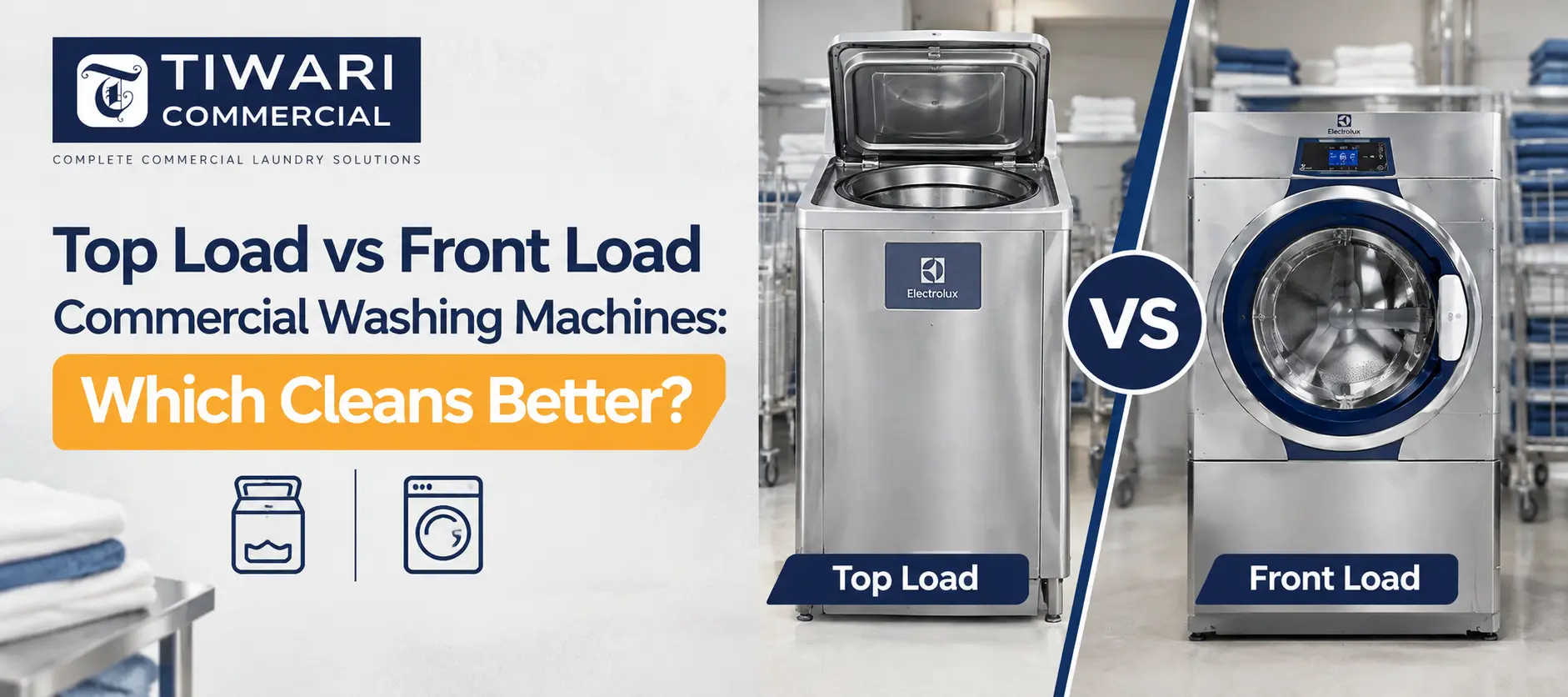
If you've ever stood in a showroom comparing a top-loading machine with a front-loading one, you've probably heard confident claims from both sides. "Top loaders are tougher." "Front loaders clean better." For a business, the stakes are higher than for a household. The machine you pick decides how clean your linen comes out, how much water and power you use every day, and how long your fabrics last before they need replacing.
So which one actually cleans better? Short answer: front-load machines usually win on cleaning quality and efficiency, while top-load machines have a few practical advantages that matter in specific situations. Let's look at why, and how to decide for your own business.
How Each Type Actually Cleans
Top-load washers
A top-loader has a drum that spins around a vertical axis. Traditional models use a central agitator, a tall post that twists back and forth to push laundry through the water. Newer designs replace it with a low impeller that moves clothes by flowing water. In both cases, the laundry is moved through a full tub of water.
Front-load washers
A front-loader has a drum that rotates on a horizontal axis. Laundry is lifted by paddles inside the drum, then dropped back into a smaller pool of water. This tumbling action is repeated throughout the wash. Most professional washer extractors work this way, which is also why they can spin so fast at the end of the cycle.
Cleaning Performance: What the Comparisons Show
Across several comparison guides, including this commercial-focused comparison from Suds List, the same pattern shows up:
- Soil removal: Front-loaders generally clean better. Because they use less water, the detergent stays more concentrated, and the tumbling action keeps fabric in contact with the wash solution for longer.
- Fabric care: The tumbling motion is gentler than a rotating agitator, so front-loaders usually cause less wear on delicate or expensive fabrics. Agitators can be rough on linen over time.
- Water extraction: Front-loaders spin at higher speeds and pull more water out of the load, so the laundry reaches the dryer drier. That shortens drying time and lowers dryer fuel or electricity use.
- Water use: Front-loaders typically use roughly half the water of a traditional agitator top-loader.
Top-load machines aren't useless, though. They tend to finish cycles faster, are cheaper to buy, and are easier to load because you don't have to bend down. Older agitator models are also simpler mechanically, which some owners prefer.
Quick Comparison Table
| Factor | Front Load | Top Load |
|---|---|---|
| Stain and soil removal | Generally better | Good for light to moderate soiling |
| Gentleness on fabric | Gentler | Rougher, especially with agitators |
| Water use | Lower | Higher |
| Spin and extraction | High speed, drier loads | Lower speed, wetter loads |
| Cycle time | Often longer | Often shorter |
| Upfront price | Usually higher | Usually lower |
| Loading comfort | Needs bending | Easier |
| Maintenance focus | Door seal and drain pump | Agitator or transmission |
This table summarizes general patterns reported across comparison guides. Exact performance depends on the specific machine, programme and detergent you use.
What About Heavy Industrial Soiling?
For factories, workshops and garages, the question changes. Greasy workwear needs hot water, the right chemicals and proper mechanical action, not just a big tub. A front-load washer extractor with programmable temperature, wash time and chemical dosing generally handles this better than a basic top-loader, and the stronger extraction helps when you're processing large quantities of heavy fabric every day.
If this is your situation, our page on industrial laundry solutions for manufacturing companies explains what to look for in equipment built for oil, grease and heavy soil.
30 kg Commercial Washing Machine Price in India: Does Load Type Matter?
A lot of buyers ask about the 30 kg commercial washing machine price in India as soon as they've chosen a type. In general, top-load models cost less upfront, while front-load washer extractors cost more because of their stronger construction, higher spin speed and more advanced controls. That said, prices overlap widely. Marketplace listings show a 30 kg commercial washing machine at around ₹1.85 lakh, while a 30 kg industrial washer extractor is listed at about ₹4.25 lakh.
Remember that listings are usually asking prices, may exclude GST and rarely include installation. A cheaper machine can cost more in the long run if it uses extra water, leaves laundry wetter and needs longer drying. When you compare quotes, compare running costs as well as the purchase price.
When a Top-Load Machine Still Makes Sense
Top-loaders can be a reasonable choice if:
- Your laundry is lightly soiled and quantities are modest
- Budget is the main constraint and you plan to upgrade later
- Your staff find bending to load a front-loader difficult
- You want a simple machine with fewer door seals to maintain
When a Front-Load Machine Is the Better Investment
Front-loaders are usually the smarter choice if:
- You run high volumes every day and water and drying costs add up
- You wash hotel linen, hospital linen or uniforms that need consistent, hygienic cleaning
- Fabric life matters to you, since gentler washing means less replacement
- You want programmable cycles, higher extraction and the option of pairing with larger dryers
Maintenance: A Fair Warning About Front-Loaders
Front-load machines need a little more attention to door seals and drains. Lint and residue can collect around the gasket and cause odours or leaks if it isn't wiped regularly, and leaving the door slightly open between loads helps air it out. Hard water, common in much of North India, can also shorten the life of heating elements in any type of machine, so a water softener is worth considering.
Frequently Asked Questions
Do front-load commercial washers really clean better? In most comparisons, yes. The tumbling action, lower water use and more concentrated detergent usually give better soil removal and gentler treatment of fabric.
Are top-load commercial washers cheaper to run? Usually not. They typically use more water and leave laundry wetter, which increases drying time, even though they cost less to buy.
Which type is better for hotels and hospitals? Front-load washer extractors are generally preferred because of their consistent results, stronger extraction and programmable control, and some hospitals also need barrier washers for infection control.
Choosing the Right Machine for Your Business
The best machine isn't the cheapest or the most expensive. It's the one that matches your laundry type, daily volume and budget. At Tiwari Commercial Equipment, we help you compare options honestly. Browse our Washers range, or see equipment designed for hospitality businesses and commercial laundries.
Not sure which type fits? Tell us about your laundry volume and fabrics, and we'll recommend a machine and give you a clear, itemised quote.