


Why Is Commercial Laundry Equipment So Expensive?
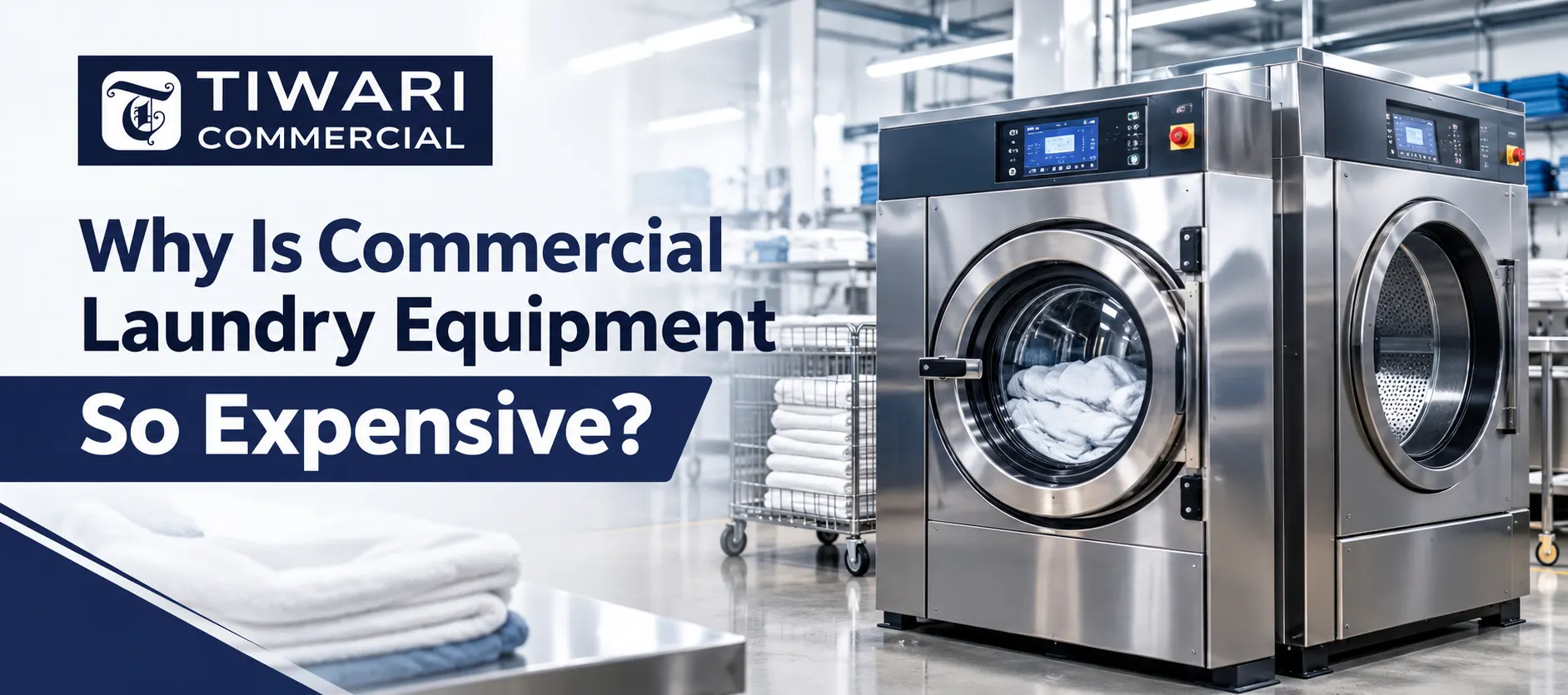
If you've priced a commercial washing machine for the first time, the quote probably made you stop and re-read it. A machine that looks, from a distance, like a bigger version of what's in your kitchen costs several times more. So what is that money buying?
Short answer: you're paying for a machine built to run all day, every day, for years. A home washer is designed for a few loads a week. A commercial one is expected to handle that in a single morning.
It's built like industrial equipment, not an appliance
Open up a household washer and you'll find a lot of light-gauge metal and plastic. Open up a commercial machine and you'll find a heavy stainless-steel drum, a reinforced frame, and bearings sized for serious loads. The drum alone is a big part of the cost.
That weight isn't for show. When a large drum spins at high speed with 30 or 60 kg of wet linen inside, the forces are enormous. Cheap construction fails there, usually at the bearings or the suspension, and usually at the worst possible time.
Capacity and extraction change the math
Commercial washers are rated by load size, and bigger drums need stronger motors, better drives, and more precise balancing. The same goes for extraction speed. A high-G-force spin pulls far more water out of towels and bedsheets, which means dryers have less to do.
That's where the savings start. Less moisture going into the dryer means shorter cycles, lower gas or electricity bills, and faster turnaround. If you run a hotel or a hospital laundry, those minutes add up quickly.
Programmable controls and dosing
Most commercial machines let you program wash cycles: water level, temperature, wash time, rinses. Healthcare facilities, for example, need specific thermal disinfection routines, and a hotel wants delicate cycles for bedding that doesn't need to be treated like work uniforms.
Many also connect to automatic chemical dosing systems. It's one more component to build and certify, but it keeps chemical use consistent and stops staff from guessing at detergent amounts.
You're paying for uptime
This is the part people underestimate. In a household, a broken washer is annoying. In a laundromat or a hotel, it's lost revenue or a pile of unwashed linen and unhappy guests.
Commercial equipment is engineered to be serviced. Parts are accessible, components are standard, and good suppliers stock spares. That support network is built into the price, and it's worth a lot when something needs fixing on a Saturday.
The real cost is cost per load
Purchase price is only the start. A better way to compare machines is cost per kilo of laundry over, say, ten years. That includes:
- Water and energy use per cycle
- Dryer time saved through better extraction
- Repair and downtime costs
- Expected lifespan
- Resale value
A cheaper machine that burns more water, breaks down twice a year, and needs replacing in five years can easily lose to a more expensive one that quietly runs for fifteen. We've seen owners learn this the hard way more than once.
Where people overspend
None of this means the most expensive option is right for you. A small guesthouse doesn't need a 60 kg washer-extractor, and a laundromat doesn't need hospital-grade barrier machines. Oversizing is one of the most common mistakes: you pay more upfront and then run half-empty drums, wasting water and power.
Start with your real daily volume, your peak days, and how fast you need linen back. Then size the equipment to that, with a little room to grow.
Choosing with confidence
Before you buy, ask for the machine's water and energy consumption, warranty terms, spare parts availability, and installation requirements (power load, drainage, and floor strength all matter more than people expect). A supplier who can answer those clearly is usually one who'll still pick up the phone after the sale.
If you're comparing options, you can browse our range of commercial laundry equipment and see which capacities and configurations fit your setup.
Commercial laundry equipment is expensive because it's built to work harder, last longer, and earn its keep. Look at the cost over the machine's whole life, not just the price tag, and the numbers start to make a lot more sense.